
· Rumtoo Engineering Team · Operations · 9 min read
Plastic Pelletizer Maintenance Checklist for Higher Uptime
A practical plastic pelletizer maintenance checklist covering daily, weekly, and monthly routines. Reduce unplanned downtime, protect pellet quality, and extend equipment life with a preventive approach.

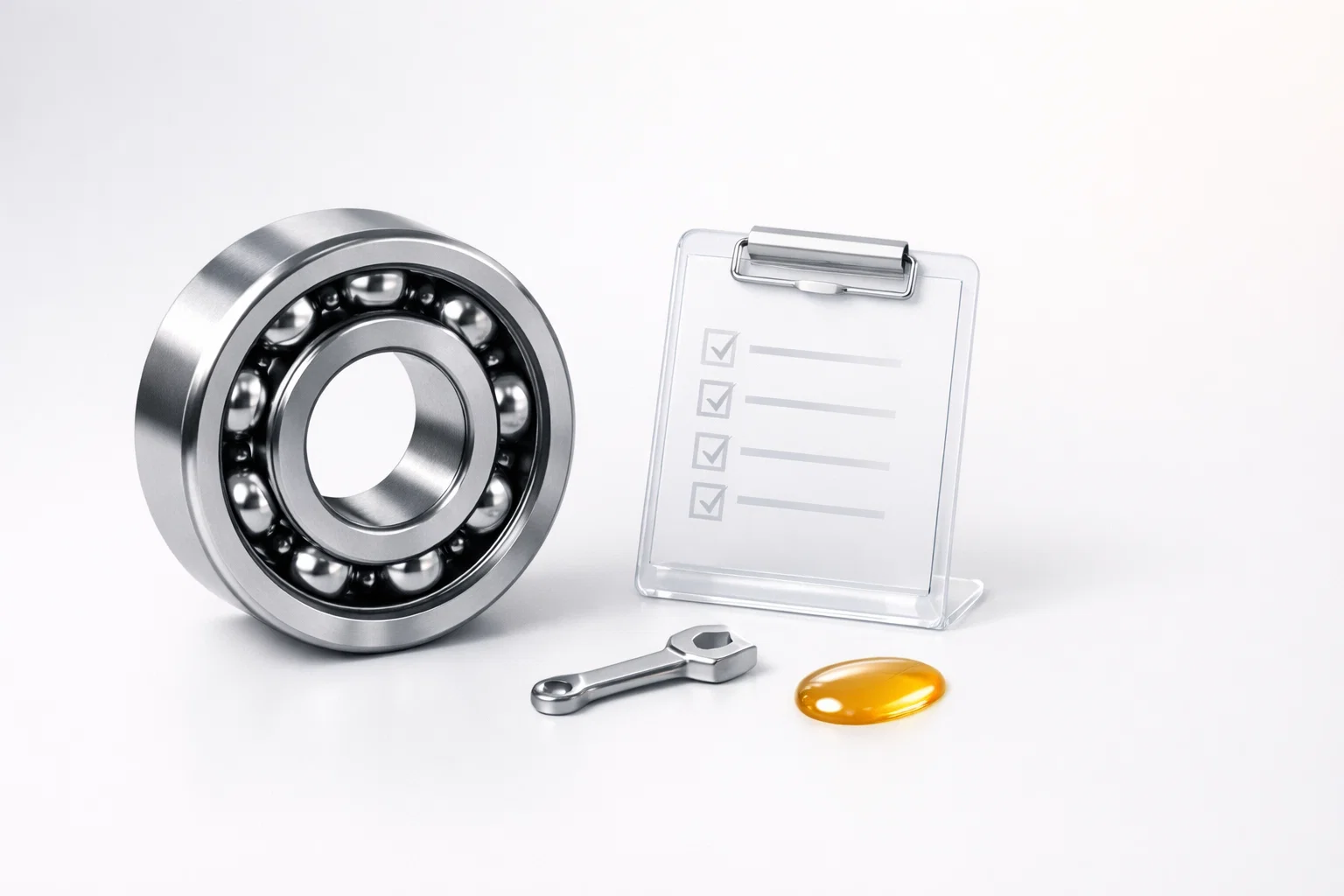
A strong plastic pelletizer maintenance checklist does more than prevent breakdowns. It protects pellet quality, reduces emergency stoppages, and keeps energy consumption from drifting upward over time. In most recycling plants, poor maintenance shows up first as unstable output and quality complaints long before it becomes a full machine failure.
If your plant depends on continuous extrusion and pelletizing, Rumtoo recommends linking preventive maintenance with both spare parts and maintenance support and your broader recycling pelletizing line operating plan. Understanding the fundamentals covered in our pelletizing plastic process guide also helps maintenance technicians distinguish between material variation and machine degradation.
Daily checklist
Daily checks are short, taking roughly 10–15 minutes per shift, but they catch the highest-frequency operational hazards before they escalate into catastrophic damage.
- Inspect die face and cutter chamber: Remove plastic buildup around the die holes using soft brass or copper scrapers. Never use hardened steel screwdrivers or chisels that can score the precision ground die face.
- Check for fluid leaks: Inspect barrel heating zones, hydraulic screen changer hoses, and gearbox seals for oil, water, or hydraulic fluid leakage.
- Verify temperature zone stability: Confirm that all barrel zones and the die head reach and maintain setpoint temperatures (within ±2°C) for at least 20 minutes before engaging the screw drive. Cold starts can snap screw shanks or shear drive keys.
- Acoustic and vibration monitoring: Listen for abnormal bearing rumble in the thrust bearing housing, gear meshing chatter in the reduction box, or blade scraping against the die plate.
- Assess pellet geometry: Inspect newly formed pellets every 2 hours under consistent output. Check for tails, hollow centers, agglomeration, or fines.
- Shutdown purge and cavity cleaning: Purge the barrel with virgin or clean high-stability polymer if shutting down for more than 4 hours, and drain cooling water lines in unheated facilities to prevent corrosion or freeze damage.
If operators notice more tails, fines, or pellet size drift, treat that as a maintenance signal, not just an operator process adjustment.
Weekly checklist
Weekly maintenance should focus on mechanical wear items, filtration performance, and alignment stability.
- Inspect pelletizer rotating knives: Measure knife blade edge wear and cutting angle. Ensure knife holder spring tension or pneumatic pressure provides uniform blade contact across the entire die surface (typical contact clearance: 0.03–0.08 mm).
- Service melt filter & screen changer: Inspect hydraulic slide plates or rotary seals for polymer seepage. Record screen change frequency—a sudden drop in pack life indicates upstream contamination in the film washing line.
- Drive transmission inspection: Check belt tension, inspect flexible couplings for rubber element cracking, and verify gearbox oil level in the sight glass.
- Lubrication maintenance: Grease motor bearings, thrust pack bearings, and cutter carriage guide rails using high-temperature lithium-complex or synthetic greases per the OEM schedule.
- Vacuum degassing circuit cleaning: Clean vacuum traps, condensation knock-out pots, and vent port throats. Volatile monomers, moisture, and printing ink waxes condense in vent piping, restricting airflow and causing porous pellets.
- Water ring cooling loop inspection: On water ring plastic pelletizers, inspect water spray nozzles for scale clogging, clean inline duplex basket strainers, and verify process water temperatures via your industrial water chiller remain below 45°C.
For film applications, knife sharpness and melt cleanliness often affect pellet quality faster than any other single operational factor.
Monthly checklist
Monthly work should be thorough, deep, and grounded in equipment telemetry.
- Review motor load telemetry: Compare motor amperage draw at steady throughput against baseline commissioning data. A 10–15% load increase under identical resin and temperature conditions indicates barrel wear, screw flight degradation, or severe screen pack blinding.
- Thermal control loop calibration: Check all band heaters, solid-state relays (SSRs), and thermocouples. Measure current draw per zone to detect burnt-out half-elements that cause cold spots along the barrel.
- Screw and barrel wear measurement: Using internal bore micrometers or lead-wire impression tests during scheduled pullouts, measure screw flight-to-barrel radial clearance. When radial gap exceeds 0.6–0.8 mm, melt backflow degrades plasticizing efficiency and spikes melt temperature.
- Assembly fastener torque verification: Retorque tie-rod bolts, die plate flange studs, and cutter carriage mounting fasteners to specified torque values using a calibrated torque wrench.
- Electrical cabinet hygiene: Vacuum cooling fan filters, clear dust accumulation, and inspect contactors and terminal blocks with an infrared thermal camera to catch loose, overheating wiring terminals before fire hazards occur.
- Critical spare parts audit: Reconcile physical warehouse stock against minimum buffer requirements for knives, thermocouples, ceramic heater bands, rupture discs, and screen packs.
This monthly review is also the right time to check whether the plant’s current spare-parts stock still matches actual machine wear patterns.
Plastic pelletizer maintenance inspection matrix
The following matrix provides standardized acceptance criteria and corrective actions for core pelletizer subsystems:
| Frequency | Subsystem / Component | Inspection Task & Acceptance Criteria | Action if Out of Tolerance |
|---|---|---|---|
| Daily | Die face & cutter head | Check for melt buildup; blade clearance 0.03–0.08 mm | Clean die face with copper scraper; adjust blade tension |
| Daily | Barrel heating zones | Verify PID temperature stability (±2°C of setpoint) | Test thermocouple continuity; replace failed band heater |
| Weekly | Pelletizer rotating knives | Inspect cutting edge sharpness; check for micro-chipping | Sharpen or replace knives; check rotor shaft runout |
| Weekly | Melt filter / screen changer | Monitor differential pressure across breaker plate | Advance screen pack before ΔP exceeds 25 bar |
| Weekly | Water ring cooling loop | Check water flow rate (minimum 15 m³/h) and water temperature (<45°C) | Clean inline water strainer; inspect heat exchanger |
| Monthly | Screw & barrel clearance | Measure flight clearance against barrel ID with feeler gauges | Record wear trend; plan screw rebuilding if gap >0.8 mm |
| Monthly | Main drive gearbox | Check gear oil level, color, and operating temperature (<75°C) | Sample oil for metal particulates; top off synthetic ISO VG 220/320 |
| Monthly | Vacuum degassing system | Verify vacuum level (-0.08 to -0.095 MPa); inspect condenser | Clean vacuum trap & condensation pot; replace worn vacuum seals |
The four maintenance points that affect pellet quality most
1. Knife condition and cutting geometry
Dull knives do not cut molten polymer strands cleanly; they pinch, stretch, and smear polymer against the die plate. This generates excessive fines, tail strings (which plug air-conveying ducts), and uneven granule weights. While a line can physically continue running with worn knives, downstream bulk buyers will reject lots due to inconsistent bulk density and feeder bridging.
2. Melt cleanliness and breaker plate maintenance
If filtration is unstable or screen changes are delayed past critical pressure thresholds, unmelted gels and foreign particles breach the screen pack. Contaminants lodge in individual die orifices, causing die-hole freeze-off, erratic strand velocity, and surging in adjacent holes.
3. Temperature zone calibration
Drifting temperature zones along the extruder barrel lead to inconsistent polymer viscosity. If metering zone temperatures drop, shear heating spikes, degrading thermal stabilizers; if die zone heaters fail, outer die holes freeze while center holes overheat, resulting in severe pellet weight variation.
4. Venting and degassing efficiency
Poor vent performance increases the risk of trapped volatiles, water vapor, and entrapped air in the melt stream. This causes porous, foamed pellets with reduced bulk density, poor mechanical strength, and noticeable off-gassing during injection molding or blown-film re-extrusion.
Common maintenance mistakes to avoid
Running until failure
Treating the pelletizer as a “run until it stops” asset inevitably results in damaged screw flights, scored barrels, and warped die plates. Emergency shutdowns cost 4–6 times more than planned preventive maintenance due to lost scrap production and expedited component freight.
Ignoring minor pellet defects
A small increase in fines or tails is usually an early warning that the cutter, die face, or process stability needs attention. Catching edge wear during a scheduled shift change avoids an emergency line trip mid-production.
Treating supplier support as an emergency-only service
For many recycling facilities, scheduling routine preventive audits with the machinery manufacturer is far more economical than troubleshooting persistent yield degradation alone. Rumtoo clients regularly leverage our global on-site support for comprehensive machine alignment, vibration analysis, and operator maintenance workshops.
A simple rule for maintenance planning
If the pelletizer is a revenue bottleneck, the maintenance plan should be scheduled by production risk, not by convenience. In practice that means:
- Track wear trends, not just failures: Measure blade wear in millimeters per metric ton processed to predict replacement schedules.
- Replace predictable wear parts before peak-load periods: Never start a high-volume recycling campaign with borderline knives or aging heater bands.
- Keep critical consumables on site: Maintain a safety buffer of wear items so that unexpected foreign matter incidents do not halt the entire facility.
- Tie pellet-quality checks to machine-condition checks: Train quality inspectors to inform maintenance supervisors immediately when pellet bulk density or shape deviates.
Spare parts worth stocking before you need them
Plants usually lose the most money on the parts that are inexpensive but slow to replace when they are missing. For standard hard plastic pelletizing lines and film compacting systems, the minimum critical warehouse stock should include:
- Rotating pelletizer knives and blade retaining bolts
- Mica or ceramic barrel band heaters and J/K-type thermocouples
- Hydraulic screen changer bronze wear plates and high-pressure seals
- Die face pressure transducers and digital melt temperature probes
- Vacuum pump mechanical seals, check valves, and filter cartridges
- Replacement breaker plates and stainless steel extruder screen mesh
If your line runs continuously, it is also worth reviewing your spare parts and maintenance coverage before peak production periods.
Frequently asked questions
How often should pelletizer knives be checked?
Pelletizer knives should be visually inspected once per shift during routine die cavity cleaning, and undergo thorough micrometer wear measurement weekly. When processing abrasive post-consumer polymers (such as agricultural film with mineral contamination or highly filled rigid regrind), knives may require sharpening or indexing every 72–120 operating hours.
What maintenance issue affects pellet quality fastest?
Knife wear, melt filtration blinding, and die zone temperature drift affect pellet quality almost immediately. These issues show up within minutes as elongated tails, hollow granules, or surging pellet size before any mechanical alarms trip on the control panel.
When should a plant bring in external OEM support?
External support makes sense when the line exhibits recurring melt pressure instability, persistent motor current spikes, or when executing major scheduled overhauls like screw pulling and barrel relining. Rumtoo’s global on-site support team provides specialized precision alignment tools and process engineering expertise to restore nameplate throughput.
Final takeaway
The best plastic pelletizer maintenance checklist is one your plant will actually follow every day, every week, and every month. Preventive maintenance keeps throughput stable, protects pellet quality, and eliminates the risk of minor wear items triggering catastrophic shutdowns.
If you want help building a tailored maintenance program around your equipment, contact our engineering team. We can help review wear items, service schedules, and spare-parts planning for your specific polymer streams and operating conditions.
- plastic pelletizer maintenance
- pelletizer checklist
- recycling line uptime
- spare parts
- preventive maintenance